
Community-led resilience - A ‘How to’ Guide
Section 4: Stay informed
Keeping people informed
It is important that community resilience efforts don’t only happen during emergencies. The value of being prepared cannot be overstated and, while it is true that people can’t or shouldn’t be on 365-day a year standby alert, the more informed and aware people are of possible risks and how to respond then the more likely they will be to prepare for such events appropriately.
Ways of keeping people informed and aware of community resilience matters can include:
On-going newsletters or news updates in local media
A community resilience ‘calendar’
Resilience surveys to identify on-going awareness or needs in relation to emergency situations
On-going dialogue with community groups through attending meetings, providing community resilience inputs
Community events - once a year – to celebrate local efforts and raise awareness of potential risks and how to respond in an emergency
Dealing with the aftermath
Emergency events can have very serious consequences including damage to property, injury and loss of life. These can have a very traumatic effect on local communities, and it is important that attention is paid to being able to provide or access support not only in the immediate aftermath but also in the longer-term.
Local groups will be in a good position to be able to offer informal support but can also obtain information about where people can access more intensive support (such as counselling) after particularly traumatic experiences. Lifelines Scotland provides advice, support and information for people involved in emergency responses to help them look after themselves as well as others.
Reviewing, evaluating, improving and sustaining
In order to be able to respond well to emergency situations we need to be able to learn from what happened the last time, or what has happened elsewhere. There are various ways to do this.
Most Councils/emergency services will have de-briefing sessions after emergency events which help them to identify what went well and what could be improved the next time. This will feed into on-going community resilience planning. It is important that communities are involved in these so if you haven’t been involved or been invited to be involved contact your local Resilience Officer or equivalent within the Council to request to be involved.
It is also a good idea to do your own local reflection on how your community resilience efforts are going, identifying what has worked well and any areas for improvement or further development. If you have a local resilience plan (see Section 1) then this can be used as the basis for a Review session where you look at how you’ve done with your resilience process.
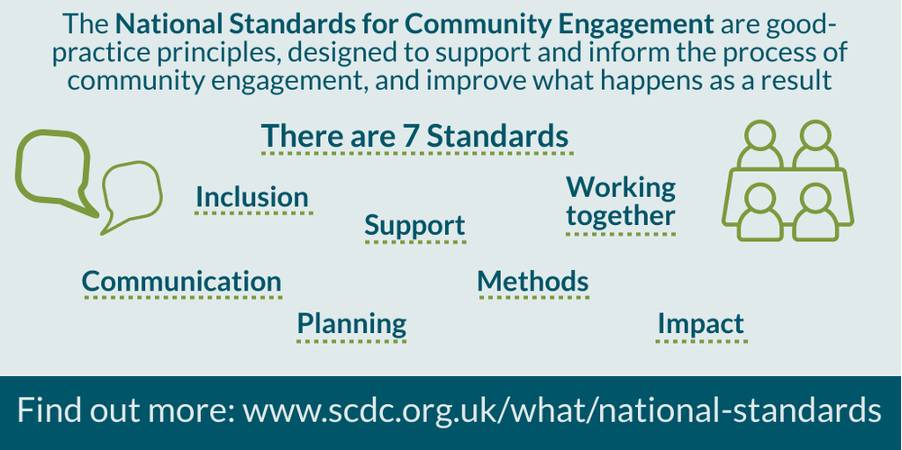
A useful checklist for this review is framed by the National Standards for Community Engagement and can include the following questions:
Inclusion
How well did we involve the people and organisations in our community?
For example: Did we think about people who are excluded from participating due to social or economic disadvantage. Did we take account of a wide range of opinions in our resilience planning?
Support
How good were we at identifying and overcoming any barriers to participation?
For example: Did we assess people’s support needs? Were actions taken to remove any barriers to participation in our emergency responses?
Planning
How clear were we about what we were trying to achieve?
For example: Was there a clear community resilience plan in place? Was there enough time and resources to support an effective community resilience process?
Working Together
How well did we work together in our community resilience responses?
For example: Were roles and responsibilities clear and understood for all those involved? Did the methods of communication used during the emergency event meet the needs of all partners?
Methods
How good were our methods of engagement with the local community?
For example: Did we use a variety of methods to ensure that all voices were heard? Did we use creative approaches to encourage participation by all sections of our community?
Communication
How well did we communicate with the people and organisations in our community?
For example: Was information made available in appropriate formats? Was the information clear and accessible? Did we provide feedback to the community on the emergency event and any decisions or actions that have been taken as a result?
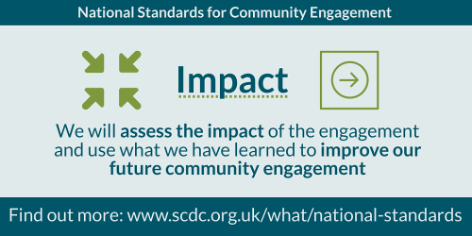
Impact
How well did we assess the impact of the emergency event and use what we have learned to improve our future community resilience planning?
For example: Is the community more involved and influential in local community resilience planning? Have local outcomes or services improved as a result of this involvement?
It is important that any local community structures are in place for the long-term and people know where to go to or who to contact if they have any issues or if they want to get involved.
In Section 1 we have outlined some options for local resilience organising and it is important that attention is paid to sustaining these structures and keeping them fresh and relevant. Support for this may be available from your local Third Sector Interface or from your Community Learning and Development Team, or Community Resilience Team.